
Marketing for consultants in Canada often looks productive on the surface — regular LinkedIn posts, polished websites, thoughtful networking, maybe even a webinar or two. But productivity doesn’t always translate into profitability. The reason many consultants in Canada feel frustrated with their marketing efforts isn’t a lack of action. It’s unclear positioning.
When your expertise isn’t framed with strategic precision, your marketing can generate visibility without generating revenue. And when authority isn’t clearly articulated, even experienced consultants can sound interchangeable in a crowded market.
Effort is seldom the problem. They have a clarity problem. If you’re a consultant in Canada and your marketing feels inconsistent, exhausting, or underwhelming… you’re not alone.
But the issue probably isn’t:
- The algorithm
- The platform
- The economy
- Or your work ethic
What’s often happening instead is that authority isn’t clearly claimed or communicated.
Why Consulting Is Structurally Harder to Market Than Other Businesses
Products are visible. Many services are tangible.
Consulting is neither. You’re selling thinking. Insight. Decision-making support. Transformation.
When someone buys a product, they can compare features. When someone hires a service provider, they can usually define deliverables— haircut, bookkeeping reports, or a renovated kitchen.
But when someone hires a consultant, they’re buying:
- Your judgment
- Your pattern recognition
- Your ability to reduce risk
- Your ability to see what they can’t see
- Your capacity to guide higher-stakes decisions
That makes your value abstract. And, abstract value requires clearer positioning. If you don’t define the value clearly, the buyer will simplify it for you often in ways that reduce your perceived differentiation.
How Buyers Reduce Risk When Hiring a Consultant
Consulting is a perceived-risk purchase. There’s no physical proof before engagement. No guarantee of outcome. Just perceived credibility. So buyers do what buyers always do when risk feels high:
They simplify. They compare based on:
- Familiarity
- Referrals
- Brand recognition
- Or price
If your authority isn’t immediately clear, buyers won’t ask you to clarify it. They’ll quietly move on.
In consulting, buyers often decide who feels credible before they ever schedule a call — and unclear positioning quietly removes you from consideration.
Why Vague Authority Quietly Costs Consultants Money
When positioning lacks precision, consultants default to safe language:
“Helping businesses grow.”
“Strategic solutions for leaders.”
“Driving results through innovation.”
It sounds professional, but it also sounds identical to everyone else. Those phrases don’t clarify:
- Who specifically you help
- What specific problem you solve
- What changes because of your involvement
- Why is your perspective, or approach, is distinct
So what happens? You get:
- “Interesting conversations” that don’t convert
- Prospects asking about price early
- Referrals that stall
- Long sales cycles
- Smaller project scopes
Not because your expertise lacks value but because your authority isn’t anchored clearly enough to justify it. When value feels ambiguous, buyers protect themselves by negotiating, delaying, or choosing the safer option.
That’s the hidden cost of unclear positioning.
The Canadian Market Amplifies The Problem
Consultants in Canada operate within tighter professional ecosystems. Markets are often smaller. Referrals matter more. Reputation travels quickly.
There’s also cross-border competition from U.S. firms with louder positioning and bigger marketing budgets. Add in longer corporate decision cycles and relationship-driven buying behaviour, and your positioning has to carry more weight. If your differentiation isn’t obvious, you don’t get dramatic rejection. You get ghosted. That’s most likely when you say, “my marketing isn’t working.”
But often, it’s working exactly as positioned.

What High-Level Consultants Do Differently
The consultants who command higher fees and stronger demand don’t necessarily market more. They position themselves more precisely. They:
- Define a clear category or specialization
- Articulate a specific problem they are known for solving
- Frame outcomes in concrete commercial terms
- Anchor their authority visibly and consistently
- Align messaging with how buyers evaluate risk
Their websites don’t rely on general statements. Their content reinforces a consistent perspective. Their authority is easy to identify. As a result, buyers don’t have to work to understand their value.
The conclusion feels obvious.
The Real Shift
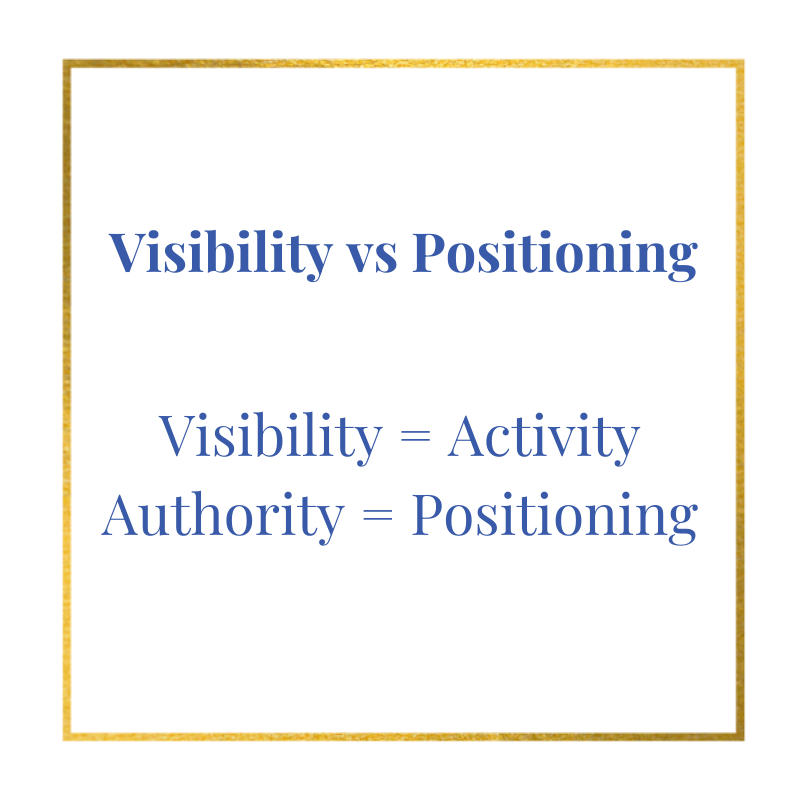
Most consultants (coaches, service providers) try to fix frustration with more activity. They are under the belief that they need to post more, get out and network more. But amplifying activity without clarifying positioning often amplifies confusion.
When your UVP and positioning are sharp:
- Content becomes easier to create
- Sales conversations shorten
- Pricing discussions strengthen
- Referrals convert more consistently
Because buyers understand your value before you explain it, that’s the difference between visibility and authority.
The Real Question
Are you trying to market harder? Or are you ready to position smarter?
If you’re a consultant in Canada who suspects your expertise should be generating stronger traction by now, you may not need more marketing activity. You may need sharper positioning.
If you want to see how a marketing strategist for consultants in Canada approaches that shift, you can learn more about working with a Marketing Strategist for Consultants in Canada. When positioning is clear, marketing stops feeling reactive and starts functioning as a strategic asset.

